UNESCO World Heritage in Argentina
Eleven inscribed sites, from the Iguazú Falls and the Patagonian ice fields to painted caves, Jesuit missions and the Inca road — what each one is and where it sits.
By VisitZonda Editors ·
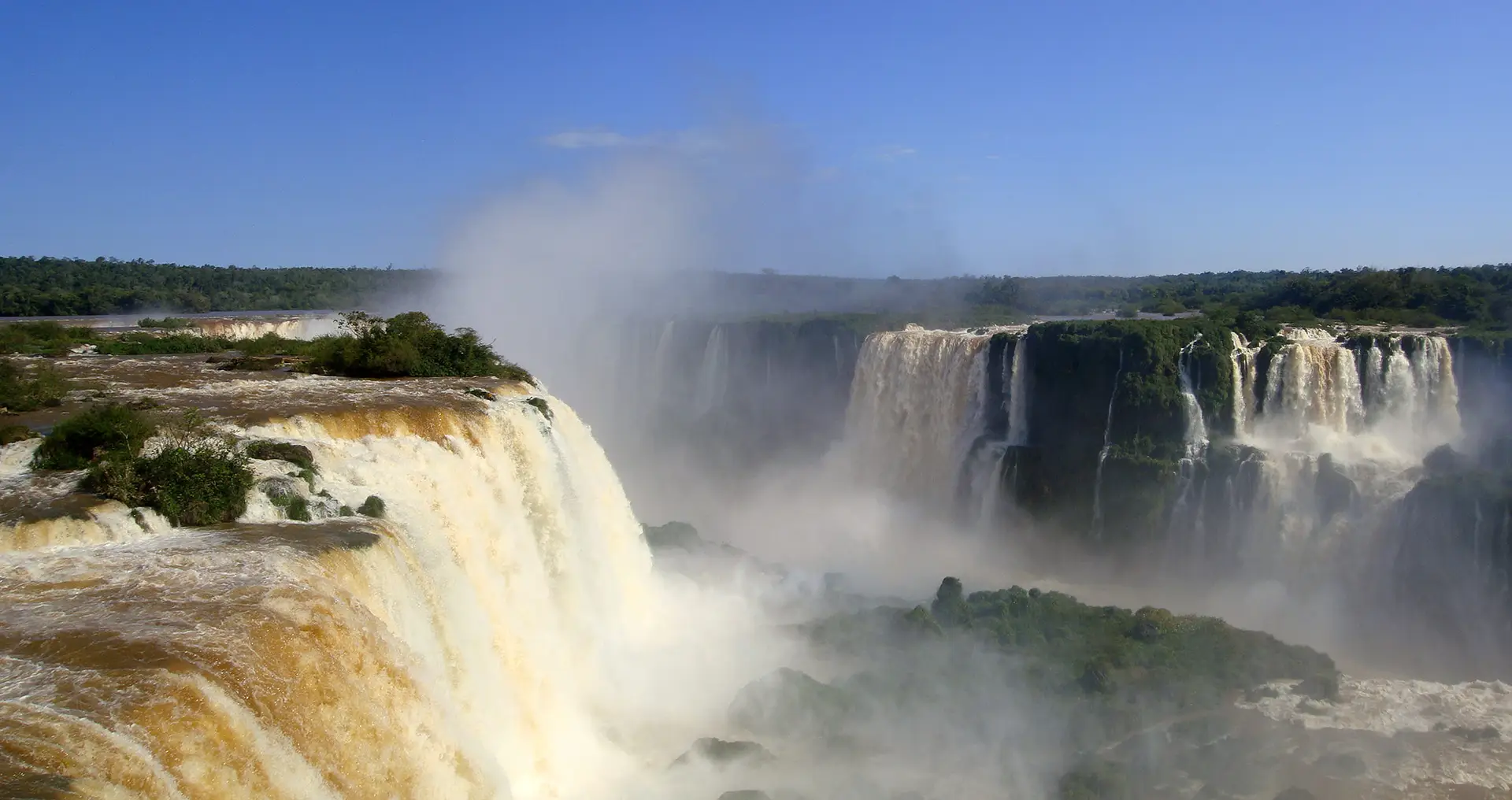
Photo: Mariordo (Mario Roberto Durán Ortiz), CC BY-SA 4.0

Argentina has eleven sites on the UNESCO World Heritage list, split between natural landscapes and cultural landmarks and spread across almost every region. Together they are a reasonable map of what the country is for.
Natural sites
Iguazú National Park (Misiones, 1984). Around 275 waterfalls on the Brazilian border, inside subtropical rainforest that holds toucans, coatis and jaguars. The Garganta del Diablo walkway is the set piece; the Argentine side has most of the trails.
Los Glaciares National Park (Santa Cruz, 1981). The southern Patagonian ice field, the Perito Moreno Glacier and the granite towers of Fitz Roy and Cerro Torre above El Chaltén. Two very different visits — ice from a boat at El Calafate, mountains on foot in the north of the park.
Península Valdés (Chubut, 1999). A breeding station for southern right whales between June and December, plus elephant seals, sea lions, Magellanic penguins and the orcas that hunt along the Punta Norte beaches.
Ischigualasto and Talampaya (San Juan and La Rioja, 2000). Two adjoining parks preserving a near-complete Triassic fossil record — the dinosaurs’ first chapter — inside desert landscapes of carved rock and red canyon walls.
Los Alerces National Park (Chubut, 2017). Valdivian temperate rainforest and stands of alerce, the Patagonian cypress, among the longest-lived trees on earth.
Cultural sites
Cueva de las Manos (Santa Cruz, 1999). Hundreds of stencilled hands on a canyon wall in the Río Pinturas, painted between roughly 9,500 and 1,500 years ago — the oldest art in South America of its kind.
Quebrada de Humahuaca (Jujuy, 2003). A 155 km valley that has been a trade and migration corridor for 10,000 years, from pre-Hispanic settlements to the Inca road to the Spanish colonial towns.
Qhapaq Ñan, Andean Road System (2014). The Inca road, inscribed across six countries; its Argentine sections run through the Northwest and the Puna.
Jesuit Missions of the Guaranís (Misiones, 1983) and the Jesuit Block and Estancias of Córdoba (2000). The seventeenth- and eighteenth-century Jesuit presence — mission ruins in the northeast, a university, churches and working estancias in the Centre.
The work of Le Corbusier (La Plata, 2016). The Curutchet House, the architect’s only building in the Americas, part of a transnational inscription.
Planning around them
They are not a circuit — Iguazú and Los Glaciares are 3,500 km apart. Group them by region instead: Iguazú with the missions in the Litoral; Los Glaciares, Valdés and Los Alerces across Patagonia; Humahuaca and the Inca road in the Northwest; Ischigualasto and Talampaya in Cuyo, within a day of each other.
Several of the natural sites have strict seasons — whales at Valdés from June, trekking at Los Glaciares from November — so check our guide on when to visit Argentina before fixing dates.