Getting around Argentina
The eighth-largest country on earth, with its distances, domestic flights, long-distance buses, hire cars and the legend of Ruta 40 — how to plan the moving parts.
By VisitZonda Editors ·
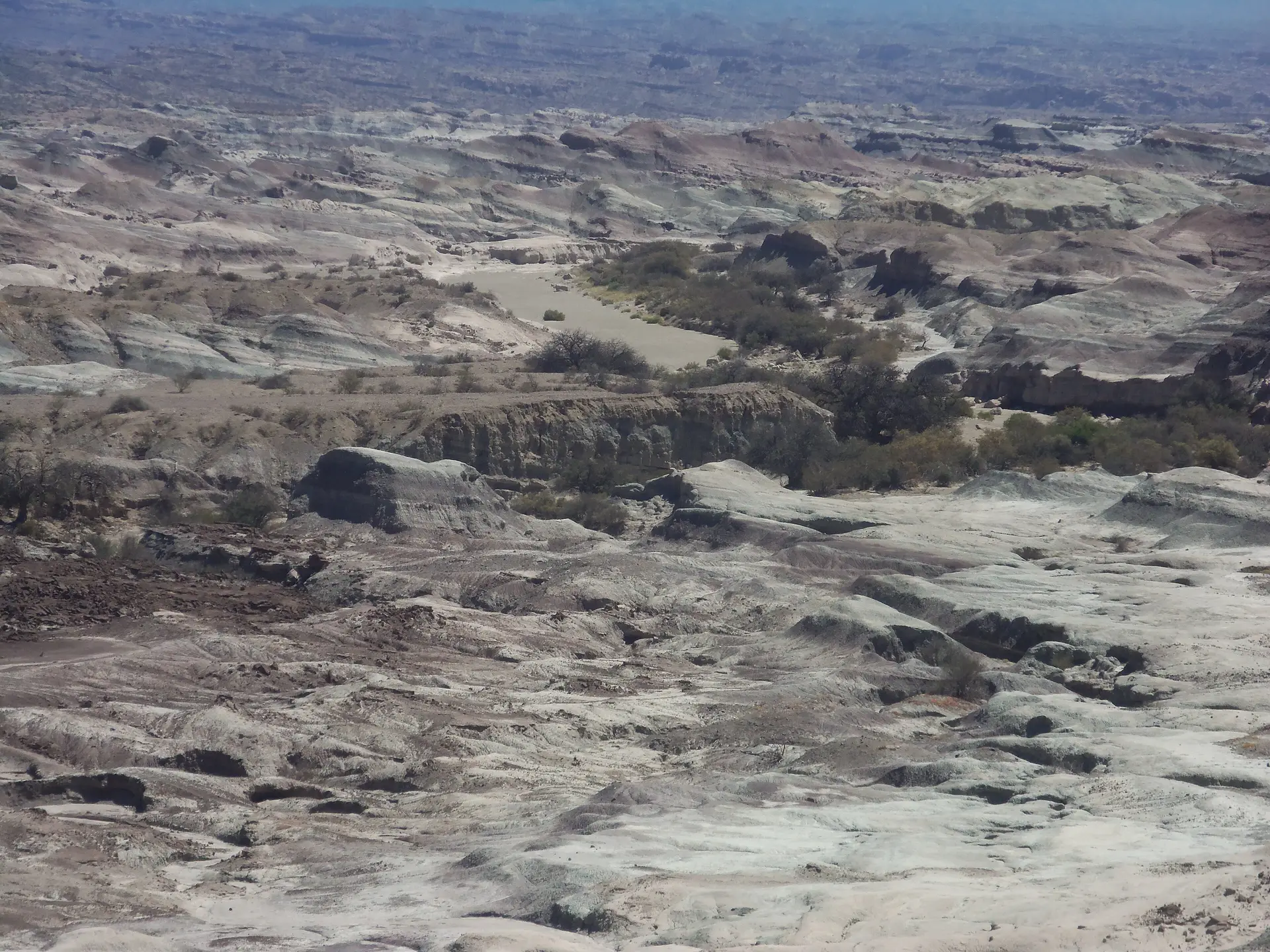
Photo: Silvanamisiones, CC BY-SA 4.0

Argentina is the eighth-largest country in the world, and underestimating that is the most common planning mistake. Buenos Aires to Ushuaia is about 3,000 km; Buenos Aires to Iguazú is 1,300 km; Salta to El Calafate is further than London to Istanbul. Almost every itinerary needs at least one domestic flight.
Domestic flights
Flying is how Argentines cross their own country. The network is strongly hub-and-spoke through Buenos Aires: Aeroparque (AEP), close to the centre, handles most domestic routes, while Ezeiza (EZE) is the international airport an hour out of town. Connecting between the two means a transfer across the city — allow three hours or more.
Direct flights between provincial cities exist but are thin, so a Salta–Bariloche hop can route through Buenos Aires and take a day. Book early for January, February and July, when fares climb steeply.
Long-distance buses
Argentina’s bus network is excellent and reaches places planes do not. Seats are graded — semi-cama, cama and cama suite, in increasing order of recline — and overnight services on the main corridors are comfortable enough to sleep properly. Buenos Aires to Mendoza or Bariloche is a standard overnight run.
Buses are considerably cheaper than flying and far more frequent on short and medium hops. They become impractical once distances pass about 1,000 km, unless the journey itself is the point.
Trains
Limited but pleasant where it exists. Long-distance services run from Buenos Aires towards Mar del Plata, Rosario, Córdoba and Tucumán — slow, inexpensive and worth booking well ahead. Scenic lines, like the Tren a las Nubes in Salta and the Tren Patagónico, are excursions rather than transport.
Hiring a car
A car makes sense where the landscape is the destination: the Calchaquí Valleys in the Northwest, the Ruta de los Siete Lagos in Patagonia, the wine roads of Mendoza, the Córdoba sierras. It makes much less sense for crossing the Pampas or for Buenos Aires itself, where parking and traffic outweigh the freedom.
Note that one-way hires across long distances carry a steep drop-off fee, and that crossing into Chile needs paperwork arranged with the hire company in advance.
Ruta 40
RN40 runs more than 5,000 km along the Andes from La Quiaca on the Bolivian border to Cabo Vírgenes in Santa Cruz — the longest road in the country and a journey in its own right. Much of it is paved now, but long Patagonian and Puna stretches are gravel, service stations can be 200 km apart and the wind is a genuine factor. Carry fuel, water and a spare, and never rely on mobile coverage.
Practical notes
- Distances are given in kilometres and speeds in km/h; expect 80–90 km/h averages on rural routes, far less on gravel.
- Petrol stations in remote areas sometimes run dry — fill up when you can, not when you must.
- Toll roads around Buenos Aires and on the main corridors mostly take cards.
- Domestic flights, buses and trains all want photo ID at boarding; carry your passport.